Search This Blog

Showing posts with label Tom Vilsack. Show all posts

Thursday, July 21, 2016

Three Ways USDA Helps Consumers Keep Foods Safe

From the #USDA:


A plate of hamburgers beside vegetables on skewers, ketchup, mustard and a pepper shaker
It’s important for consumers to be concerned about food safety. From shopping to storing leftovers, USDA provides easily accessible information to help keep food safe every step of the way.
This post is part of the Science Tuesday feature series on the USDA blog. Check back each week as we showcase stories and news from USDA’s rich science and research portfolio.
July is the height of summer grilling season, and throughout the month USDA is highlighting changes made to the U.S. food safety system over the course of this Administration. For an interactive look at USDA’s work to ensure your food is safe, visit the USDA Results project on Medium.com and readChapter Seven: Safer Food and Greater Consumer Confidence
Have you ever wondered how to safely grill your burgers? How about determining the latest food safety recalls?  USDA provides a number of resources to ensure that you have access to the most up to date information on food safety.
Keeping the food on America’s tables safe to eat is a serious challenge and USDA is serious about helping families avoid dangerous bacteria and other contaminants that can lead to foodborne illness. The Centers for Disease Control and Prevention estimates that one in six Americans are likely to become ill from foodborne illness each year, but most of these illnesses are thought to be preventable. That’s why USDA provides a number of tools consumers can use in order to prevent or reduce the risk of foodborne illness that would spoil the meal.
1. Ask Karen
Ask Karen provides expert knowledge on preventing foodborne illness by sharing food handling, storage, and safe preparation of meat, poultry, and egg products. Using a webpage link, you can search for such topics as—how long you can safely keep meat in the refrigerator, how long it takes to boil an egg or whether it’s better to use wooden or plastic cutting boards. The Ask Karen page is available 24/7 and includes the capability to chat live with a food safety advisor.
2. USDA Meat and Poultry Hotline
If you prefer to speak directly to a food safety specialist, USDA Meat and Poultry Hotline personnel can answer your food safety questions on weekdays year-round. This toll-free telephone service provides answers about the safe storage, handling, and preparation of meat, poultry, and egg products. The Hotline can be reached Monday through Friday from 10:00 a.m. to 4:00 p.m. Eastern Time and provides information in English and Spanish. Outside of these days/hours, there are recorded food safety messages available 24 hours a day. You may also send email questions toMPHotline.fsis@usda.gov.
USDA Meat and Poultry Hotline toll free at 1-888-MPHotline (1-888-674-6854).
3. Email Updates
The USDA Food Safety Inspection Service provides an email subscription service that sends email updates targeted to selected topics you have chosen. You may add or delete your selected subscription items at any time.
These three, easy-to-use resources can help keep the food on your dinner table safe. If you would like more information, please visit www.foodsafety.gov.

Breaking Down Barriers to Address Food Insecurity

From the #USDA:


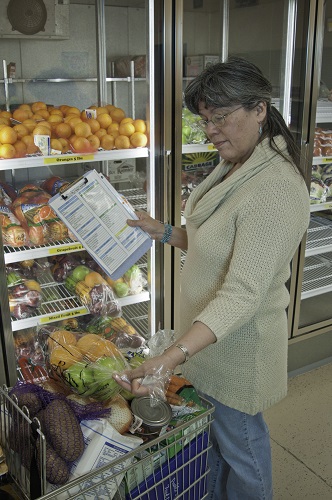
A woman checking food
USDA engages in extensive partner engagement and collaboration with both traditional and non-traditional partners, including tribal organizations.
No American should have to go hungry.  USDA’s 15 nutrition assistance programs make great strides in reaching those in need, but challenges and barriers persist to eradicating food insecurity in our nation.  That’s where leadership and partnerships come into play.
Earlier this month, FNS had the opportunity to participate in an interactive discussion on the obstacles faced on effectively communicating to specific populations at the 2016 Feeding America Annual Conference in Chicago.  The dialogue focused on reaching the most vulnerable Americans: those in Tribal communities, teens and our nation’s proud military veterans.  The hurdles to reach all three are unique, and strategies require nuance, understanding and a bold commitment to better connect individuals with nutrition assistance information.
Almost one in four American Indians are food insecure, with a poverty rate nearly double that of national levels.  Addressing this challenge goes well-beyond traditional barriers – many live in hard-to-reach rural communities and there are over 250 indigenous dialects in the U.S.  It requires a deep cultural understanding and respect.  It’s critical that nutrition-assistance partners learn about the Tribal Nations with which they interact and educate themselves on cultural traditions and customs.  Most importantly, partners should establish rapport and visit frequently: Most Tribes place great emphasis and value on face-to-face interactions, which go a long way in establishing trust.
Teens represent another hard-to-reach demographic.  With the ever-changing ways teens communicate, reaching them becomes a real challenge.  Numerous partners have enjoyed success through social media and pop culture channels and by drawing kids in with relevant activities available at meal sites, like those in summer meals programs.   Another challenge relates to stigma.  Unsurprisingly, young people don’t want to be perceived as poor or in need.  Involving them as volunteers and interns in programs helps engage teens and offers them an important source of pride.
Finally, the service of our nation’s veterans demands to be honored, but sadly, all too many return home and struggle in their transition.  Collectively, we need to better educate these proud Americans of the availability of nutrition programs they may be eligible for.  Many may not be aware of the assistance they, their families and fellow veterans have to accessing nutritious meals.  To address this information gap, USDA works closely with partners, such as Feeding America, to provide information about available resources and breakdown barriers related to pride and embarrassment.  A network of support that includes the Veterans Administration, Department of Defense, homeless organizations, and a variety of partners, is needed to make sure their needs are met.
There are many variables and challenges to reaching three diverse groups of Americans.  The conference gave USDA and our vital partners a chance to reflect on these barriers, develop solutions and foster the leadership needed to end hunger in America.
For more on Food Distribution Program on Indian Reservations, visithttp://www.fns.usda.gov/fdpir/food-distribution-program-indian-reservations-fdpir
To see how USDA Summer Meal Programs reach our nation’s youth, check out:http://www.fns.usda.gov/sfsp/raise-awareness
To help inform our military and veteran families about available nutrition assistance, see http://www.fns.usda.gov/get-involved/military-and-veteran-families

Tuesday, June 28, 2016

USDA Signs Three International Agreements Supporting Animal Health and Global Trade

From the #USDA:


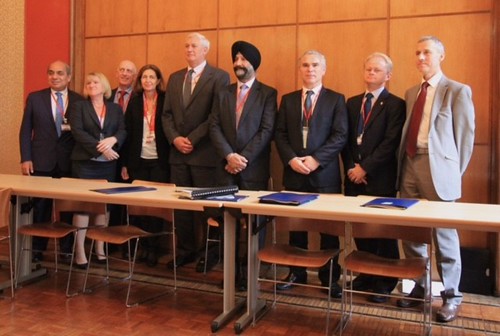
U.S. delegation at the World Organization for Animal Health in Paris
A U.S. delegation, led by Dr. Jack Shere, USDA Chief Veterinary Officer, and Dr. John Clifford, U.S. Delegate to the World Organization for Animal Health (OIE) participated in the 84th General Session in Paris, France.
International trade is a key factor in the economic and financial stability of many countries.  Trade restrictions resulting from an animal disease outbreak can have devastating economic effects.  With this in mind, USDA’s Animal and Plant Health Inspection Service signed three international agreements on this very topic last month at a meeting of the World Organization for Animal Health (OIE) in Paris, France.  These agreements will make it easier to maintain safe and fair trade of animals and animal products if an animal disease outbreak occurs. They emphasize the cooperation and understanding of the countries involved to promote shared knowledge, data and resources, which can be crucial during an animal health event.
The three arrangements, signed by the United States, relate to the International Animal Health Emergency Reserve (also signed by Australia, Canada, Ireland, New Zealand, and the United Kingdom), the Sharing of Vaccines for Foot and Mouth Disease (Australia, Canada, Mexico, and New Zealand), and Supporting the Recognition of Zoning for Foreign Animal Disease Outbreaks (Australia, Canada, and New Zealand).
The International Animal Health Emergency Reserve agreement allows for countries to share emergency response teams and personnel as needed during animal disease outbreaks.  It also lets the countries involved to act rapidly and more effectively control and eradicate an outbreak.
The Sharing of Vaccines for Foot and Mouth Disease agreement allows for countries to more readily request and consider requests for FMD vaccine from their respective FMD vaccine banks. This particular arrangement provides an opportunity to share vaccine resources can be beneficial during an outbreak and leaves the door open to include other countries’ FMD banks if there is future interest.
Supporting the Recognition of Zoning for Foreign Animal Disease Outbreaks agreement allows countries to understand and accept each other’s processes for managing outbreaks and paves the way for recognizing “zones” for trading purposes.  This arrangement would allow for trade to be resumed early from disease-free zones and support continuing trade from affected zones where biosecurity risks can be effectively managed through specific import conditions, such as product treatments.
Our animal health experts have a shared vision to safeguard our nation’s agricultural resources and to support international trade and cooperation while preventing the introduction of dangerous and costly disease in our country.  These agreements will complement our existing preparedness activities and benefit not only US producers and consumers, but the global community.

Rebuilding Lives: Celebrating Homeownership Month

From the #USDA:


USDA Works with Families to Realize Their Dreams of Homeownership infographic
USDA Works with Families to Realize Their Dreams of Homeownership infographic. Click to enlarge
Five years ago, Christy Carr seemed like a long shot as a future homeowner.  She was a newly divorced, unemployed mom of five, and her credit score was in the 300’s. The home she shared with her children had no heat, no electricity and no running water. A neighbor let Christy run an extension cord to his garage outlet just so that the family could keep the lights on. Since they had no car and only a cooler to keep their food cold, they walked to the store three times a day.
In order to rebuild her life, Christy had to find work and clean up her credit score.  After many interviews, Christy was offered a good job at a marketing company. She was able to move into an apartment but it was too small to house all of her children, and her older sons had to stay with another family member. At the same time, Christy brought her student loans out of default and paid off old marital debts. After 18 months, her credit score had risen by 300 points, and she was able to open a credit card secured through her bank.
With her financial situation improving, Christy focused on finding a safe place to raise all of her children under one roof. She applied for USDA’s Rural Development’s Single Family Housing Direct Loan Program and made an offer on the house of her dreams.  The professional staff in Ohio’s USDA Rural Development office were able to help her through the process, with Christy eventually closing the loan and moving her family into their new home. Now, she can continue to invest in not only her family and their future, but her community as well. In the last eight years, one third of USDA’s Direct Home Loans have been allocated to single-parent households like Christy’s.
Christy Carr is just one of the many deserving people that Rural Housing Service staff help each year to realize their dream of homeownership. Since 2009, we have assisted 1.1 million homeowners with USDA home loans, including more than 69,000 very-low income homeowners. USDA also provides home repair loans and grants that make it possible for people in rural communities to make necessary repairs and upgrades to their homes. Over the last eight years, USDA has helped more than 63,000 very-low income homeowners make essential repairs.
During Homeownership Month, we honor and thank all of the people who work with us to Build Communities Together. If you think homeownership is right for you, contact your local Rural Development office to learn about the assistance that may be available.
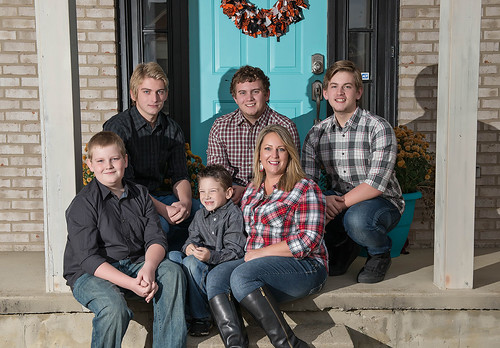
Christy Carr and sons
Christy Carr and her sons on the front steps of their new home, financed by USDA Rural Housing Service. Photo credit: Lori McCoy

Ripe for Trade – GIPSA Helps It Happen

From the #USDA:


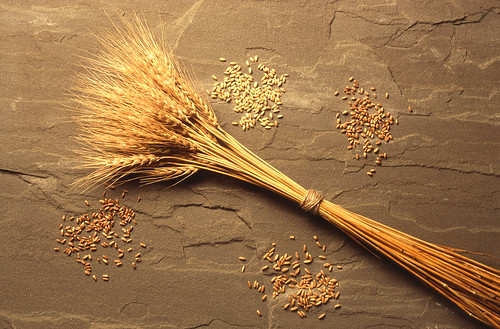
Different varieties of wheat
Wheat is one of the grains that GIPSA helps move through the marketplace.
There’s certainly a lot of talk about trade this month at USDA.  As the U.S. looks to expand connections with Asian nations, American ranchers, growers, and producers are also keeping an eye on potential economic dealings in the Caribbean.
I’m joining the discussion to shed light on how the Grain Inspection Packers and Stockyards Administration (GIPSA) plays a role in facilitating American grain sales into foreign markets and assuring those markets are maintained through its world-class service of weighing and inspection.  First let me set the stage about recent events.
The Trans-Pacific Partnership (TPP) is coming up for a vote in Congress, and recently the International Trade Commission released a report forecasting that TPP will boost U.S. agricultural output by some $10 billion each year by 2032.  In his final State of the Union speech in January the President noted that TPP will cut 18,000 taxes on American-made products and add jobs. The President also emphasized that it’s time to solidify our relationship with former adversaries and boost economic ties.
GIPSA’s Federal Grain Inspection Service (FGIS) plays a role in these expanded markets by helping move our nation’s harvest into the marketplace through impartial inspection and weighing services of American grains, oilseeds, pulses and legumes.  Farmers, handlers, processors, exporters, and international buyers continue to benefit from FGIS procedures and certifications that for more than 40 years have stood as a gold standard representing the quality of U.S. export grain.
Closer to our shores, Cuba is becoming a buzzword since reestablishment of diplomatic relations between our two countries and President Obama’s historic trip in March. Staff from the FGIS Office of International Affairs participated in a similar notable event on April 18, briefing a delegation from Cuba’s ministry of agriculture during their visit to Washington.
FGIS staff explained that as a regulatory agency, GIPSA facilitates shipments of rice, grain, and other commodities now scarce in Cuba, by providing accurate and consistent services for export trade. Since 1976 FGIS established a standard for quality assessments, regulating handling practices, and managing a network of federal, state, and private laboratories to provide impartial third-party inspection and weighing services.
Earlier this month, Agriculture Secretary Tom Vilsack returned to his home state and hosted Cuba’s minister of agriculture on a showcase tour of Iowa—the nation’s top producer of corn, soy, eggs, and hogs.  The secretary was exploring market options for America’s farmers and ranchers, large and small. “I happen to think the future of American agriculture, and Cuban agriculture, is incredibly bright,” he said. The secretary also called for increased cooperation between U.S. and Cuban farmers.
Whether in English or Spanish, farmers speak about trade in a language that is universally understood. The Cubans naturally welcome a potential U.S. market for their organic mangoes, avocados, pineapples and papayas as much as American producers and ranchers are ready to sell their soybeans, rice, poultry and hogs to a country where food shortages are not uncommon. “The key here is making sure that we have legal and regulatory systems and market options so that big and small can be supported and enhanced,” said Secretary Vilsack during his visit with the Cuban minister last week.
As opportunities for new markets expand, GIPSA continues its role in expediting trade so that America’s farmers remain competitive in a global economy.  Initiatives like TPP and improved relations with nations like Cuba, and along the Pacific Rim, set the right course to sustain our rural economies and enable more families to stay on the farm.
To learn more about how FGIS helps facilitate international grain sales please visit the new GIPSA website and view our Harbor to Harvest video.
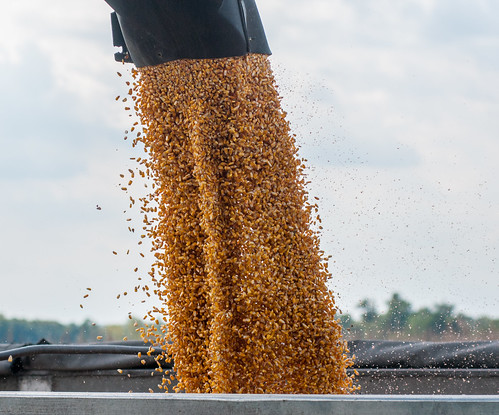
Corn being transferred from corn harvester to trailer
GIPSA’s Federal Grain Inspection Service (FGIS) provides an impartial inspection and weighing services for American grains, oilseeds, pulses and legumes. Here, the corn harvest is unloaded.

Wednesday, June 22, 2016

U.S. Soybeans Help Feed the World

From the #USDA:


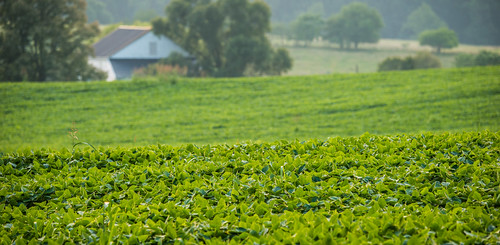
Soybeans growing on a farm
The U.S. soy industry continues to reach new heights in producing soybean products to help feed the world.
It takes more than just a bountiful harvest to succeed in today’s agricultural marketplace.  Many farmers find strength in numbers by pooling resources and expertise to grow and sustain their businesses in both the U.S. and international markets. For soybean farmers, the United Soybean Board (USB) works to maintain and expand domestic and foreign markets and uses for soybeans and soybean products.
Working through the U.S. Soybean Export Council, the USB annually conducts about 140 projects in international markets to promote U.S. soy products.  Comprising 70 soybean farmers, the USB facilitates trade servicing and technical support programs with importers, processors, livestock producers, and aquaculture operations.  Another important component of the soybean marketing effort is to invite international buyers, processors, and other users of U.S. soy products to the United States to understand and see firsthand the U.S. soybean production, processing, distribution and transportation systems.
In the most recent marketing year (2014 – 2015), about 59 percent of total U.S. soybean production was exported to international markets – that’s a total of more than 2.3 billion bushels with an astounding value of more than $24 billion.  The products included whole soybeans, soybean meal (primarily used for livestock and poultry feed), and edible soybean oil.  And, it’s not just soybeans that are seeing great export results.  The past seven years have represented the strongest period in history for American agricultural exports, with international sales of U.S. farm and food products totaling $911.4 billion between fiscal years 2009 and 2015.
Major importing countries of U.S. soybean products were China, which alone imported over 1.08 billion bushels of soybeans; Mexico; Japan; Canada; the Philippines; Dominican Republic; and Peru.
The USB is one of more than 20 Research and Promotion programs overseen by USDA’s Agricultural Marketing Service (AMS).  All of these programs are requested, funded, and driven by the industry they serve, and allow farmers to pool their resources to develop new markets, strengthen existing markets, and conduct important research and promotion activities.  AMS provides oversight, also paid for by the industry, which ensures fiscal accountability and program integrity for participating stakeholders.
AMS administers a wide range of programs and services that create domestic and international marketing opportunities for U.S. producers of food, fiber, and specialty crops – including soybean farmers.  In addition to overseeing the USB, AMS provides critical market data that supports the marketing of soybeans and soy products through USDA Market News.
Thanks to consistent quality and the hard work and dedication of soybean farmers, with support from AMS and the USB, the U.S. soy industry continues to reach new heights in producing soybean products to help feed the world.

Thursday, June 16, 2016

Exports: Getting Into the Game

From the #USDA:


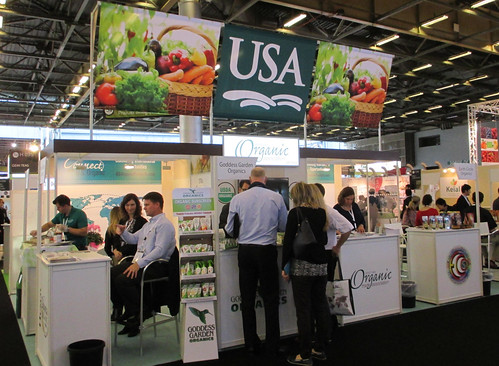
A trade show
With the support of FAS and its partners, U.S. organic producers market their wares to international buyers at SIAL Paris, one of the world’s largest food and beverage trade shows.
Whether you are new to exporting or your company has been in the business for years, USDA’s Foreign Agricultural Service (FAS) and its partners can help you build markets for your products around the globe. FAS offers a variety of services and programs that help U.S. agricultural exporters succeed in the global marketplace. From facilitating relationships with potential foreign buyers, to providing technical and financial assistance, FAS resources and expertise link U.S. agriculture to a world of opportunities.
For those new to exporting, a great place to start is with the State Regional Trade Group (SRTG) that covers your area. FAS supports four of these nonprofit organizations, which in turn assist U.S. food and agricultural businesses with the entire exporting process. Your SRTG can help you learn the fundamentals of exporting, identify overseas opportunities and market your products through trade shows and trade missions. With FAS support, SRTGs also help fund international marketing campaigns and promote U.S. farm and food products overseas. FAS and SRTGs work closely together with the ultimate goal of helping U.S. food and agricultural interests build a global business. Here’s more information about the STRGs.
FAS also partners with more than 70 nonprofit trade associations, called “cooperators,” that represent producers of myriad food and agricultural products — from pecans to papayas, from sorghum to salmon, from dried beans to beef, and beyond. As part of their mission to promote U.S. agricultural products around the world, many cooperator organizations offer exporter assistance, sponsor inbound and outbound trade missions, and help farmers and ranchers identify international market opportunities. Here’s the online directory of FAS cooperator organizations.
Doing business in foreign countries and cultures can be daunting, but FAS has a global network of offices, covering more than 170 countries, with staff who serve as the eyes, ears and voice for U.S. agriculture around the world. They analyze foreign market opportunities, prepare trade forecasts, and track changes in policies affecting U.S. agricultural exports and imports. This first-hand intelligence can help exporters make informed decisions about how and where to grow their businesses.
Even experienced exporters can run into challenges. Navigating certification, documentation and registration requirements can be confusing and time-consuming. But help is just a phone call or an email away. The FAS Trade Facilitation Desk (202-720-2378 or agexport@fas.usda.gov) serves as a point of contact for exporters, state departments of agriculture and industry cooperator groups seeking assistance and guidance on foreign import requirements.
Wondering if your business is ready to take the leap into the international marketplace? In addition to the above resources available from FAS, you can visit BusinessUSA to assess your export-readiness and find out how to tap into a host of U.S. government programs and services to help you get started.

USDA Market News – Your Source for Retail Commodity Prices

From the #USDA:


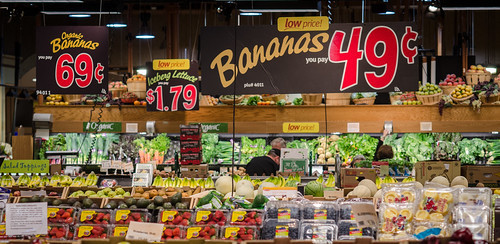
Produce at a grocery store in Fairfax, Virginia
As an unbiased agricultural resource, Market News retail reports help encourage market stability and transparency by promoting healthy competition within the marketplace and providing equal access to market information for small and mid-sized producers and retailers.
Sound business decisions are based off of reliable data, and this is certainly the case for food producers and retailers.  For small and mid-sized producers, access to timely and reliable data can be critical to their success.  Whether they are selling products on the wholesale or retail market, producers need to quickly see the commodities in demand and how much they should be charging for their product or what products are the best buy for shoppers at that moment in time.
The entire agricultural supply chain turns to USDA Market News – administered by USDA’sAgricultural Marketing Service (AMS) – for the data they need when they need it.  Serving stakeholders of all sizes and at all levels of trading, from small producer to retailer to consumer, USDA Market News allows producers and purchasers to realistically compare prices, trends, supply and demand from day to day and from market to market across the country.  USDA Market News ensures that no group is disadvantaged by lack of information.
For retail data, Market News provides advertised retail pricing information, also known as weekly specials, for several hundred commodities at major retail supermarket outlets on a weekly basis.  The information is gathered from publicly available sources like retailer websites from approximately 220 chain groceries, representing some 26,000 stores nationwide.
The data includes individual weekly reports for dairy, lamb, veal, pork, beef, poultry, eggs, and specialty crops (primarily fruits and vegetables).  These reports represent weekly advertised retail prices by region, along with a national summary.
For instance, the National Retail Report – Specialty Crops, issued on June 10, 2016, lets you know that foods for summer barbecues and beach picnics were also being featured, including fresh local produce alongside lunch meats and cheeses, cuts for the grill, chips and ready-made desserts in the bakery.  Looking for a deal?  The same report lets you know that the prices for vine tomatoes were down by 21 percent.
All of the retail reports present the data in user-friendly pie charts, graphs, and of course raw numbers.  The reports include current data, the previous week’s data, and data from the previous year.  They even include pricing for organic products, and a percentage of the fruits and vegetables advertisements that are labeled as locally grown.  For more detailed information on organic and locally grown produce, you can also visit the National Retail Local and Organic Report.
To simplify data collection for multiple commodities, Market News issues the Retail Summarized Dataset, which combines all the data represented in the individual retail reports and is available in various formats.
As an unbiased resource, Market News retail reports help encourage market stability and transparency by promoting healthy competition within the marketplace and providing equal access to market information for all producers and retailers.  These reports also help producers adapt their production and marketing strategies to meet changing consumer demands, marketing practices and technologies.
If you are in the market for agricultural commodity retail data, be sure to visit the USDA Market News Retail Page.

Washington Middle School Students Give Back for Third Annual Day of Service

From the #USDA:


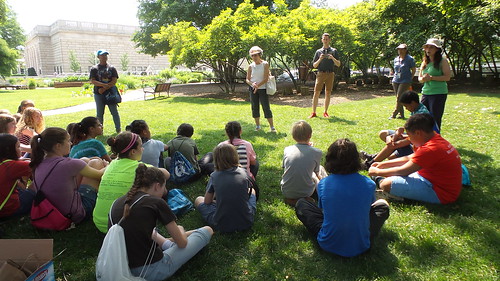
Annie Ceccarini of the People's Garden Initiative and USDA Farmers welcoming Alice Deal Middle School students
Annie Ceccarini of the People's Garden Initiative and USDA Farmers welcomes Alice Deal Middle School students to a day of fun and learning.
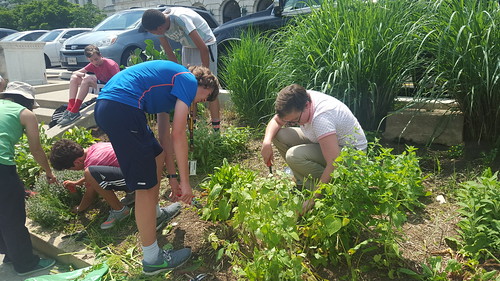
Over the past three years, USDA has welcomed seventh-graders from Alice Deal Middle School in Washington, D.C. to participate in “Deal Gives Back,” a day of service that empowers students to serve their community. This year was no exception. Alongside local volunteers, 118 students and faculty spent a day at USDA’s People’s Garden planting, weeding, and tilling soil to better understand how community gardens can increase access to fresh, healthy food choices in communities where nutritious options aren’t easily accessible.
All work and no play? Not a chance. After a warm welcome from USDA Assistant Secretary for Administration Dr. Gregory Parham, the students checked out demonstrations from the Agricultural Research Services’ (ARS) Bee Research and Systematic Etymology Labs to learn about insect classification, research, and the vital role pollinators play in growing healthy fruits and vegetables. And to wrap up the day, National Institute of Food and Agriculture (NIFA) Director Dr. Sonny Ramaswamy stopped by with a surprise treat – an invitation to try toasted mealworms. Yum!
Events like “Deal Gives Back” allow young people to enjoy the outdoors, learn where their food comes from and see firsthand the role agriculture plays in their day-to-day lives in both rural and urban communities, including our nation’s capital, Washington D.C.
Francisco Posada explaining how a honey bee hive is structured
Francisco Posada explains how a honey bee hive is structured to Aldjenatu Ali, a 7th grade student from Alice Deal Middle School.
The Office of Faith-Based and Neighborhood Partnerships is thankful for everyone who helped make this opportunity happen, including the People’s Garden volunteers and Timber Pizza Co., a local eatery which generously donated over 70 pizzas for students, faculty and volunteers.
The People’s Garden Initiative works with federal, state and local partners to build and sustain gardens that grow healthy food, people and communities. To find a People’s Garden near you, check out our interactive map at peoplesgarden.usda.gov.
Norah Deluhery, Director of the USDA Center for Faith-Based and Neighborhood Partnerships, with students
Norah Deluhery, Director of the USDA Center for Faith-Based and Neighborhood Partnerships, helps students pull weeds during Deal Gives Back.

Tuesday, June 14, 2016

Trade Agreements Key to Oregon Winemaker’s Success

From the #USDA:


Cristom wine bottles on a shelf
Cristom wine bottles on a shelf. Photo courtesy of Cristom Vineyards.
Exports are vital to the growth of U.S. agriculture. Since 2000, around 20 percent of annual agricultural production in the United States has been exported. Still, it’s difficult to conceptualize the real impact of free trade agreements until you talk to the people who have directly benefitted from them. In April, I had the pleasure of meeting with a group of winegrowers from Oregon – among them Tom Gerrie, president of Cristom Vineyards in Salem, who was kind enough to share with me his personal experience in exporting.
Cristom Vineyards is a family-run craft winery producing around 15,000 cases of wine per year. Founded in 1992 by Gerrie’s father, Paul, the company decided that in order to build global brand recognition of Oregon’s fine wines, it would need to target high-end restaurants both in the United States and abroad. In 1994, it shipped its first cases to New York, Chicago, London and Tokyo. Since then, Cristom Vineyards has expanded its exports to 48 states and 18 countries, including South Korea. More than 15 percent of Cristom’s total sales now come from exports.
Gerrie notes that exporting is not easy, but that free trade agreements have helped immensely. As a wine exporter, he constantly grapples with concerns over payment terms, shipping costs, storage conditions and, most notably, the need to discount wines to remain competitive in countries with high tariff rates. This was particularly true in South Korea, where his products faced a 15-percent tariff. But the U.S.-Korea Trade Agreement (KORUS), which entered into force in 2012, reduced those tariffs to zero. Yes, zero.
As a result, Cristom Vineyards saw a 300-percent leap in sales to South Korea. And not only did the tariff elimination improve sales, it also allowed Cristom to capture market share from competitors in Australia, New Zealand, Chile and South Africa, which are still subject to the 15-percent tariff. The tariff elimination also enabled Cristom to begin selling its higher-end wines in Korea, which previously had been cost-prohibitive. This has further enhanced the Cristom brand in Korea and helped increase demand for all the wines it sells there.
Following Cristom’s success in South Korea, Gerrie is now looking to expand elsewhere in Asia. For this reason, he is supportive of trade agreements such as Trans-Pacific Partnership (TPP). Under the TPP, tariffs on wine products will be eliminated by all member countries. This means that Japan’s tariff of 15 percent and Vietnam’s tariffs – which range as high as 35 percent – will come down to zero. TPP also contains a special annex for wine and spirits labelling which guarantees that U.S. wine companies will not have their exports discriminated against because they use words like “chateau,” “reserve,” “classic” or “vintage,” which some other countries have tried to claim for themselves.
For Cristom Vineyards, these tariff reductions and labelling agreements have a real impact on the company’s bottom line. The removal of a tariff can make the difference between breaking into a new market and standing on the outside looking in. Furthermore, in the absence of agreements like the TPP, U.S. wine exporters face a clear disadvantage against competitors from Australia and Chile that already receive preferential treatment in markets such as Japan. Failing to ratify the TPP means Cristom Vineyards and countless other producers would lose potential sales in lucrative overseas markets. We must do everything we can to ensure that our exporters are best positioned to succeed in the global marketplace – and entering into, and enforcing, free trade agreements is a key part of that effort.
For more information about the TPP and its benefits to U.S. agriculture, visit www.fas.usda.gov/tpp.

Thursday, June 9, 2016

USDA Builds Communities with Lenders

From the #USDA:


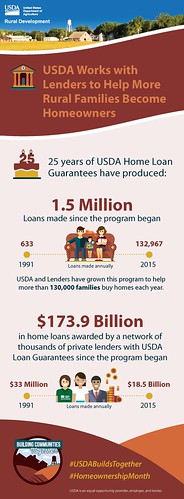
Rural families become homeowners
Rural families become homeowners. Click to enlarge.
It’s been 25 years since USDA guaranteed the first home loan in Donalsonville, Georgia. The home itself was a modest spot nestled into the tiny little village in rural Georgia. To an outsider this home may look non-descript, but to the family who moved in 25 years ago, owning this home was a dream that seemed impossible before they found out USDA and their small town lender could work together to make their dream become reality.
25 years later, USDA has worked with thousands of lenders big and small to help 1.48 million families just like the first in Donalsonville buy modest homes in rural America. USDA Home Loan Guarantees are so important to hard working folks who want to settle down in rural areas. This program is the golden example of the private and public sectors coming together to make this opportunities for a better life accessible for all.
The need for this private-public collaboration is still great across the nation. The program itself has grown exponentially since we made that first guarantee. In 1991 USDA helped 633 families realize their dreams of homeownership; just last year we guaranteed 132,967 home loans made by more than 2,800 lenders across the country.
In perspective, that’s 132,967 kitchens to cook family meals in, 132,967 living rooms where families can laugh and be together, 132,967 dining room tables for kids to do their homework, 132,967 opportunities to build household wealth, start a business, or fund education. 132,967 dreams realized just in 2015.
I couldn’t be more proud to say that since 2009, USDA and our lender friends have helped 1 millionfamilies access the opportunity to buy their own home in rural America.
Thank you to the thousands of lenders across the country who have made each one of these successes happen in the last 8 years. We are building rural communities together one home loan at a time.

Saturday, June 4, 2016

USDA goes to Washington… State

From the #USDA:


Risk Management Agency Associate Administrator Tim Gannon with farmers
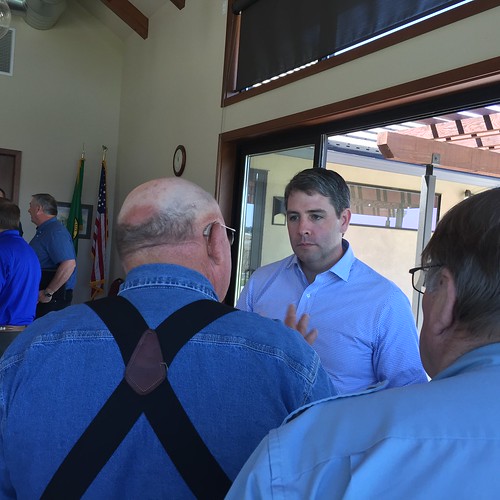
Risk Management Agency Associate Administrator Tim Gannon speaks with farmers at a public forum May 25 in Prosser, Wash. Photo courtesy: Jo Lynne Seufer, RMA
We take our responsibility to America’s farmers and ranchers very seriously at the Risk Management Agency (RMA), and we value our time spent with them and other stakeholders getting feedback on our programs and policies that are so vital to America’s food supply.
I welcome these face-to-face opportunities, and last week was fortunate to spend a few days in Washington state that culminated in a public forum to discuss the enhancements we’ve been making to the Federal crop insurance system.
Our first event of the trip was a May 23 meeting with members of the Northwest Approved Insurance Provider (AIP) Committee. The Whole-Farm Revenue Protection program (formerly known as Adjusted Gross Revenue) has been accepted as a “go-to” risk management tool for Pacific Northwest farmers and ranchers. Whole-Farm is tailored for any farm with up to $8.5 million of insured revenue, including farms with specialty or organic commodities (both crops and livestock), or those marketing to local, regional, farm-identity preserved, specialty or direct markets.
More than 75 percent of the program’s participation nationwide has been in Washington state. Washington is second in the nation in policies for organic and transitioning to organic crops, with $133.1 million in coverage in the state for 2015.
One insurance executive at our AIPs meeting said Whole-Farm has been a big improvement in the farm safety net. More producers are recognizing its benefit as a means to help soften tough times.
More than 35 farmers and ranchers, commodity and minority farmer group leaders and crop insurance professionals turned out for our final event in the region, a public forum May 25 at the Walter Clore Center in Prosser, Wash.
The RMA team got a lot of positive feedback there on Whole-Farm as well as the enhancements we’ve been making for organic and beginning farmers and ranchers. We value their suggestions for further improvements.
In the days between those events, we toured an operation near Yakima that raises apples and cherries, and did a handful of media interviews to get the word out to farmers and ranchers on all the RMA risk management tools at their disposal. On KDNA, a radio station serving the mid-Columbia Valley, my interview was conducted in Spanish.
I’d like to thank Director Ben Thiel and Risk Management Specialist Jo Lynne Seufer of our Regional Office in Spokane, who worked so hard on making the events the successes that they were.
But most of all, I’d like to thank the insurance professionals, farmers and ranchers, and other stakeholders that participated. You’re why we do the work we do. Please continue to let us know how you think we’re performing and ways we can do our jobs better.