Search This Blog

Showing posts with label USDA. Show all posts

Saturday, October 29, 2016

Meeting the China E-Commerce Challenge

From the #USDA:


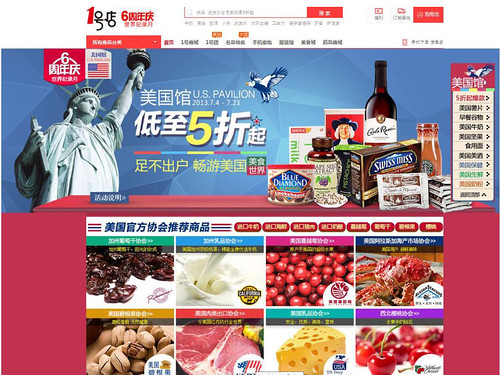
A Chinese e-commerce site
Digital strategies help promote U.S. food and agricultural products online to Chinese consumers. Since becoming the world’s largest e-commerce market in 2013, online shopping in China has continued to thrive.
In the United States, farming and technology go hand-in-hand in production agriculture. Technology helps improve productivity, efficiency and safety. Now, we’re discovering new ways that technology and digital strategies can offer similar benefits when marketing U.S. farm and food products overseas.
I recently led a group of women agricultural leaders on a trade mission to Shanghai and Hong Kong in China. One of the most interesting things we saw and learned was how e-commerce is paving the way for Chinese consumers to gain quick and easy access to high-value U.S. food and agricultural products. As a young, Chinese shopper explained to me, he purchases nearly 80 percent of his groceries online – skipping the trip to a traditional wet market or Western-style grocery store.
In Shanghai, a panel of industry experts joined us to discuss the importance of e-commerce in China. Last year, Chinese consumers spent $589.6 billion purchasing goods online, up 33.3 percent from the previous year. China has continued to dominate this form of marketing ever since it surpassed the United States to become the world’s largest e-commerce market in 2013.
While the total value of goods purchased online by Chinese consumers is impressive, what’s amazing is that many people see e-commerce as a way to buy fresh food. More and more shoppers want to buy products like live seafood, fresh fruits and vegetables and have those items arrive the next day. This is both a unique challenge and a tremendous opportunity for U.S. agribusinesses.
Asia is a key market for the United States and is only going to become more and more important over the next several decades. By 2030, 66 percent of the world’s middle class are going to reside in Asia. In China alone, 160 million middle class households will be added to China in the next decade. That’s a lot of buying power. Chinese consumers are looking for high-value, safe, quality food products at an affordable price. Those are all things that U.S. agriculture is poised to provide.
Now back from this trade mission, I want to underscore how critical it is to look at next steps to meet this challenge head on. To successfully do business in China, companies of every size need to have a digital strategy. If they haven’t already, our U.S. agribusiness partners and cooperators should begin exploring how to integrate this approach into their operations to continue moving forward in China’s growing e-commerce market.
For USDA, this growing opportunity drives home the importance of our market development programs. Along with our industry partners, we will need to explore ways we can help U.S. exporters meet China’s demand for U.S. food and agricultural products by capitalizing on the country’s e-commerce boom.


Wednesday, October 19, 2016

U.S. and Mexico Collaborate on Organic Monitoring and Enforcement

From the #USDA:


AMS Administrator Elanor Starmer and Enrique Sánchez Cruz, Director in Chief of the National Service for Animal and Plant Health, Food Safety and Quality of Mexico signing a terms of reference document
AMS Administrator Elanor Starmer and Enrique Sánchez Cruz, Director in Chief of the National Service for Animal and Plant Health, Food Safety and Quality of Mexico, sign a terms of reference document to establish the committee.
As consumer demand for organic products continues to grow around the world, the USDA Organic Seal has become a leading global standard. USDA provides support for the vibrant organic sector, representing a retail market of over $43 billion in the United States alone.  USDA’s Agricultural Marketing Service (AMS) is excited to announce another way we are helping organic producers reach new markets and offering consumers additional organic products.
We plan to establish a Joint Organic Compliance Committee in support of a potential organic equivalency arrangement between the United States and Mexico. There is already a robust trade in agricultural products taking place between our two countries: Last year, the United States exported over $100 million of organic food products to Mexico – our third largest agricultural export market – and Mexico supplied the United States with food certified to the U.S. organic standards, including seasonal produce.
But this relationship would be further facilitated by an equivalency arrangement.  Equivalency arrangements provide U.S. organic producers and handlers with access to a growing global organic market. By allowing organic products certified in one country to be sold as organic in each participating market, they reduce the cost of duplicative certifications, fees and inspections. In the past six years, USDA has established equivalency arrangements with Canada, the European Union, Japan, Korea and Switzerland, providing U.S. organic farmers and businesses with streamlined access to international organic markets valued at over $35 billion.
Given the important benefits an arrangement could bring to both countries, it is essential that the process toward equivalency be thorough, and that any arrangement is strong and mutually beneficial.  This includes ensuring that the organic systems of both countries are equivalent in all areas, including monitoring and enforcement.
As part of the equivalency process, which includes assessments and technical discussions, the United States conducted an audit of Mexico’s organic system and participated in a technical meeting with Mexican officials in April.  Through this process, the United States determined that Mexico has developed a robust organic system.  Both countries agree that collaboration on issues related to organic monitoring and enforcement would further reinforce the equivalency process and build strong support among the organic community.
To coordinate work on monitoring and enforcement, the United States and Mexico will establish the committee by exchanging terms of reference  between AMS and Mexico’s National Service for Animal and Plant Health, Food Safety and Quality.  The committee will work to increase transparency, promote bilateral technical exchange, strengthen monitoring and enforcement controls, and build stakeholder confidence in Mexico’s organic program.
Specifically, the committee will establish import certificates within six months to provide additional certification verification for traded products.  In addition, the Committee will implement sampling of organic products for chemical residues and will share sampling results with the two countries’ regulatory authorities.  The committee will also engage with certifiers operating in Mexico by conducting listening sessions to determine any additional training, oversight, or policy guidance needs.
The United States deeply values our relationship with Mexico as we work towards organic equivalency. Both countries agree that strong compliance and enforcement programs are essential to maintaining organic integrity across borders.  We look forward to continuing our work to establish an organic equivalency agreement with Mexico as the Committee’s work unfolds.

Youth Embracing Agricultural Innovation Grows a Three Leaf Clover into 4-H

From the #USDA:


A group of people near computers
Since its creation more than 100 years ago, 4-H has expanded its focus from the field to the lab to keep pace with developments in agricultural techniques and technologies. Photo courtesy of 4-H.
National 4-H Week happens each October, a time when nearly six million youth celebrate their participation in 4-H.  Every year, clubs around the country showcase the great things that 4-H offers young people and highlight the incredible things they do to make a positive impact in their communities.
The 4-H clover is one of the most recognized icons in the country, but it wasn’t always that way.  Like most things, it grew – this case from three leaves.
The seeds of 4-H were planted at the start of the 20th century by several adults in different states who were concerned about young people. Clark County, Ohio, claims credit as being the birthplace of 4-H, although the initial groups were called “The Tomato Club” or the “Corn Club.”
The times were ripe for a new youth innovation like 4-H. During the late 1800s, public universities’ researchers saw that adults in the farming communities did not readily accept the new agricultural discoveries being developed on campuses, such as hybrid seed corn, milk sanitation and home canning procedures. However, they found that young people were open to new thinking. Rural youth programs became an innovative way to introduce new agricultural technology to their communities.
In 1907, Iowa school superintendents Jessie Field Shambaugh and O.H. Benson developed a 3-leaf clover pin with an “H” on each leaf to signify “head,” “heart,” and “hands.” In a 1911 meeting, club leaders approved the design of a 4-leaf clover with an H on each leaf, adding “health.” By 1912, the groups were becoming known as 4-H clubs.
Congress passed the Smith-Lever Act in 1914, creating the Cooperative Extension System at USDA, which included work of various boys’ and girls’ clubs involved with agriculture, home economics and related subjects. This action effectively nationalized the 4-H program. Between 1915 and 1920, clubs were formed at some historically black land-grant colleges in Southern states opening up 4-H to more African-American youth.
As 4-H grew, its focus moved beyond the translation of science to include personal growth so that youth could gain skills to help them transition to adulthood in a contributing, productive and self-directed manner.
With its national headquarters located within USDA’s National Institute of Food and Agriculture (NIFA), today 4-H serves nearly 6 million youth in rural, urban and suburban communities in every state and many U.S. military installations around the world.
Today’s 4-H’ers tackle the nation’s top issues, from global food security, climate change and sustainable energy to childhood obesity and food safety. To improve the nation’s ability to compete in key scientific fields and take on the leading challenges of the 21st century, 4-H programs offer a wide variety of science, engineering, technology and applied math educational opportunities, including agricultural sciences, rocketry, robotics, environmental protection and computer science. Find out more at www.4-h.org.
NIFA invests in and advances agricultural research, education and extension and seeks to make transformative discoveries that solve societal challenges. NIFA is the home of National 4-H Headquarters.

Agricultural Data Users Weigh-in on USDA Statistical Programs

From the #USDA:


USDA NASS Data Users Meeting graphic
USDA’s National Agricultural Statistics Service will hold its annual Data Users’ Meeting, followed by a live Twitter #StatChat at 6 p.m. ET on Tuesday, October 18.
As I’ve learned over my years with the National Agricultural Statistics Service (NASS), in order to make an impact, our information needs to meet the needs of the people who use the data we produce. And while we constantly try to gauge and meet their needs, it is imperative to speak to our data users directly to get their input. We are open to feedback all the time and we hold annual special Data Users’ Meeting in Chicago every October.
Of course face-to-face interaction has its limitations since not everyone can travel to Chicago to meet with us. To address this concern, for the first time this year, we are also adding a social media component to our Data Users’ Meeting. Immediately following the panel session at the meeting, from 5 p.m. to 5:30 p.m. Central Time, I will be answering questions via Twitter during our monthly #StatChat.
This interaction, both in person and online, affords NASS, as well as other statistical agencies, a unique opportunity to hear how our data are used and how program changes impact various individuals and groups that rely on accurate agricultural statistics. This is also a fantastic platform to find out what additional programs are desired and which programs need to be adjusted to become more useful.
At this year’s meeting, which will be held later today, NASS will be joined by other agencies that work with agricultural statistics, including the U.S. Department of Agriculture’s Foreign Agricultural Service, Economic Research Service, Farm Service Agency, and the World Agricultural Outlook Board along with the U.S. Census Bureau. As you can imagine, with so many major agricultural data providers at one table, there is a broad range of topics, covering both domestic and international production as well as international trade, to discuss.
For example, one of the key topics I’m looking forward to discussing is the new program focused on the costs of honey bee pollination. This was a highly requested program, which we introduced in January 2016, and I am looking forward to hearing how well it meets the needs and expectations of our data users. NASS is also looking into making changes to our price program. We’re currently testing data collection for fertilizer, chemicals, farm machinery, seed, and feed prices. Publishing these price indexes for farm inputs should be a big step forward in keeping up with the fast changing pace of agriculture in the United States.
I hope meeting both in-person and on Twitter #StatChat will help us strengthen our relationship with all of our data users. I’m looking forward to hearing from you!

Tuesday, October 18, 2016

Empowering America: USDA’s Cooperative Month Celebration

From the #USDA:


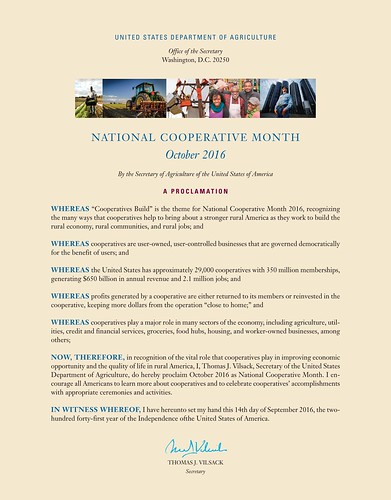
USDA National Cooperative Month Proclamation
USDA National Cooperative Month Proclamation (Click to view a larger version)
October is National Cooperative Month, and this year, USDA is helping to focus attention on the multiple ways cooperatives help build more vibrant communities and improve the livelihoods of their members. USDA’s theme for the annual celebration is: “Co-ops Empower America, USDA Empowers Co-ops.”
Cooperatives are a versatile business model that can address many needs, such as affordable housing, utility services (including electricity and broadband), agriculture production (including local foods) and can help convert existing businesses to worker ownership.
USDA fosters and supports cooperative development by providing professional technical assistance, providing co-op education and research materials, forging partnerships with rural development organizations, and by helping to secure funding for projects in underserved areas.
Agriculture Secretary Tom Vilsack recently signed a Cooperative Month Proclamation that salutes the nation’s entire cooperative business sector of about 30,000 co-ops. These co-ops generate $650 billion in revenue and more than $75 billion in wages, according to a study conducted by the University of Wisconsin Center for Cooperatives, with support from USDA Rural Development.
USDA has also released its annual Top 100 Agriculture Co-op list, which shows that Iowa is home to more Top 100 co-ops (15) than any other state. These co-ops had $149 billion in business volume (counting sales and other income) and had record net income of $4.9 billion in 2015.
Co-op Month celebrations will take place across the country in recognition of the multiple ways co-ops empower local communities. They do this by creating jobs and marketing opportunities, and by boosting the income of member-owners. Co-ops also enhance community members’ leadership skills and promote civic engagement.
You can be a part of the co-op movement by participating in USDA’s series of webinars and other events that will address key issues facing cooperatives. Topics include how to start a co-op, the legal basics of co-ops, and ways to finance co-op businesses. Stories will also be shared about how co-ops can promote social justice, resource conservation, youth engagement, and entrepreneurship. A full calendar of events for Co-op Month can be downloaded here – we look forward to your participation!

Monday, October 17, 2016

Helping States Build an Agricultural Future

From the #USDA:


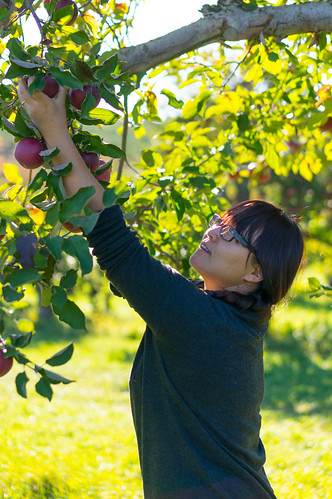
A woman picking apples
A woman picking apples—one of many specialty crops—grown in New England. Since the beginning of the Obama administration, USDA’s Agricultural Marketing Service has awarded $455.5 million in Specialty Crop Block Grants to all 50 states and several U.S. territories. These grants have supported 6,138 projects that increase capacity, opportunity, and economic success for America’s specialty crop growers. Photo courtesy Alberto Romero.
Specialty crops—fruits, vegetables, nuts and nursery crops—are an agricultural and dietary staple.  They’re a central part of a healthy diet and are vital to the economic success of American agriculture and to the farmers and businesses that rely on them for their livelihoods.
That’s why my agency, USDA’s Agricultural Marketing Service, works to support and expand markets for specialty crop growers and producers.  This year, through our Specialty Crop Block Grant Program, we awarded $62.5 million to all 50 states, the District of Columbia, and five U.S. territories to support critical work related to this segment of the agricultural industry.
USDA’s investments are funding a total of 690 projects that will help growers tackle a variety of issues—from food safety training to setting up shared processing centers.  These block grants give states and territories vital resources to invest in their growers, build stronger markets and strengthen rural America.
At USDA’s Fall Forum in New Hampshire today, I had a chance to visit with local producers and talk about some of the key issues that will impact the future of agriculture. I heard about the many opportunities and challenges that local farmers are facing, including challenges for small and midsized produce growers.  The conversation focused on how we can build on our successes, address the changing landscape and continue to build a strong partnership to support this sector long into the future.
While the Specialty Crop Block Grant program supports a wide range of efforts, some projects help build the capacity of communities to produce and market specialty crops locally and regionally – and there’s a lot of that work taking place in the Granite State.
One project funded this year is led by the Small and Beginner Farmers of New Hampshire in partnership with Merrimack County Conservation District. It will increase access to freeze drying and flash freezing equipment for specialty crop growers. This project will help farmers offer more products beyond the season for locally grown fresh produce, increase farm profits and provide local products to New Hampshire residents throughout the year.
USDA is a committed partner and supporter of American producers regardless of their size, shape or market share.  Since the beginning of the Obama administration, AMS has awarded $455.5 million in Specialty Crop Block Grants to support 6,138 projects.  USDA continues to partner with state departments of agriculture to increase opportunities for specialty crop producers by supporting projects that create new business opportunities, expand local food systems and improve food safety.
USDA’s Know Your Farmer, Know Your Food Initiative (KYF2) coordinates the Department’s strides to develop strong local and regional food systems – including SCBGP projects.  Information on local and regional supply chain resources is available on the KYF2 website, and the KYF2 Compass can help users locate USDA investments in their community.
More information on how USDA investments are connecting producers with consumers, expanding rural economic opportunities, and increasing access to healthy food is available in Chapter IV of USDA Results on Medium.

Friday, October 14, 2016

Innovation Grows Local Food Economies in New York State

From the #USDA:


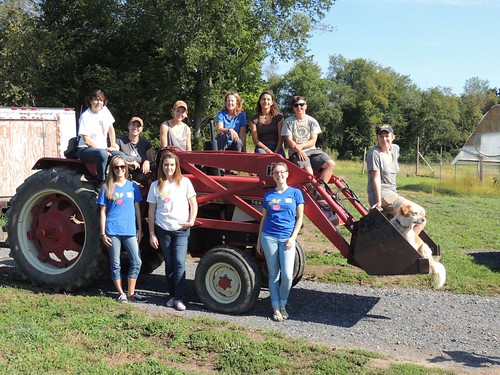
Field Goods staff with the Ironwood Farm team
Field Goods staff with the Ironwood Farm team, a women-owned farm in Columbia County.
Consumers expect a lot from local food. They want it to be fresh, healthy and raised responsibly. They want it to be affordable and convenient. And, they want their purchase to support local farmers. At first glance these goals seem at odds with each other. How can local food improve farmers’ bottom lines without being expensive? Is it possible to efficiently deliver local food to (mostly) urban consumers while still supporting (mostly) rural farm economies?
The answer may look something like Field Goods, an innovative food hub and social enterprise based in eastern New York State. Like other food hubs, Field Goods helps facilitate the connection between producer and consumer. By providing distribution and aggregation services, Field Goods helps reduce producers’ costs. And, for consumers, Field Goods delivers fresh, affordable and local products directly to workplaces – making it easier to support local producers.
Field Goods’ innovative supply chain is one very important piece of a new economic ecosystem fostered by the Hudson Valley Agricultural Development Corporation. As Todd Erling, Hudson Valley Agribusiness Development Corp. (HVADC) CEO, puts it, “Together we are working to build capacity and resiliency in the local food system. HVADC sees increasing progress in the development of a robust local food system, reinforcing our rural-urban community relationships by working to make the connections up and down the value chain with market based opportunities.”
Already Field Goods has had a tremendous impact on local economies in New York State. Over the last five years, and mostly in the last three, Field Goods has purchased more than $4 million in local products from over 80 different producers. By opening up new markets, Field Goods has made it possible for these producers to invest more in their community. For example, Field Goods’ suppliers report that they have been able to grow their operations’ acreage by an average of 183 percent. One farmer reports that he quadrupled his farm size from 10 to 40 acres thanks to Field Goods.
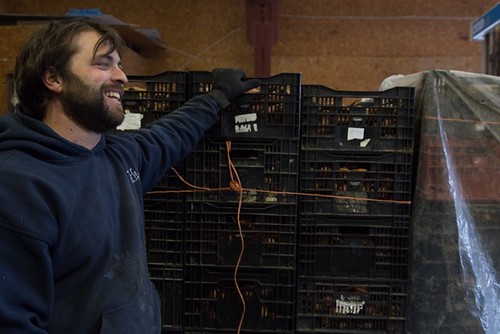
Adam Hainer delivering sweet potatoes
Adam Hainer, who expanded his farm from 10 to 40 acres thanks to Field Goods, delivers sweet potatoes.
But, as Field Goods continues to grow its business in order to increase this impact, the complexity of its supply chain has also grown. Managing a supply chain is a daunting task on its own. And, because Field Goods is committed to supporting smaller local producers their supply chain will become exponentially more complex as their business grows.
To help manage this complexity, Field Goods applied for a USDA Agriculture Marketing Service (AMSLocal Food Promotion Program (LFPP) grant and in 2014, Field Goods became one of AMS’ first LFPP recipients. Congress created LFPP in the 2014 Farm Bill as a sister program to the AMS Farmers Market Promotion Program to, in general, be used for intermediary supply chain activities that support local marketing, including aggregation, processing, storage and distribution. Field Goods used its two-year, $50,000 LFPP grant to pioneer a new piece of software it calls “In The Field.”
This software will help Field Goods maintain and even improve its relationships with producers by making collaboration easier. These relationships are essential to Field Goods’ success because their model relies on trust and cooperation. As Donna Williams, Field Goods’ founder, puts it, “I have never encountered an industry that is more collaborative. We really mutually need each other, and when we have a problem, farmers try to find a way to help us solve it.”
Field Goods’ commitment to New York’s farmers, in tandem with Donna’s drive and managerial skills have earned Field Goods the trust of local producers and consumers. In The Field helps build that trust.
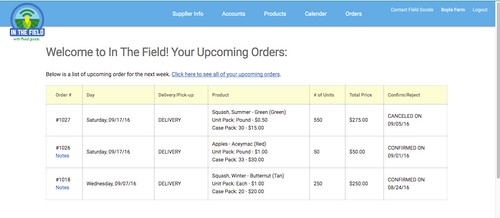
In The Field is a web-based application that allows producers to more easily share information, such as crop availability and desired price, and it makes it possible for Field Goods to manage orders and request specific products. By reducing the costs of managing the supply chain and increasing transparency, this new tool lets Field Goods continue to partner with a broad range of local producers even as they scale up the business.
In short, this new application helps Field Goods multiply their impact on the local economy.
Support for In the Field is just one example of the many ways USDA works to create market opportunities for U.S. producers, while increasing consumers’ access to healthy food and revitalizing rural economies. The Know Your Farmer, Know Your Food initiative coordinates a USDA-wide effort to carry out President Obama’s commitment to strengthen local and regional food systems. More information on the initiative, including an interactive map of local food projects across the country, can be found at www.usda.gov/knowyourfarmer.
More on the results of USDA investments can be found at New Markets, New Opportunities: Strengthening Local Food Systems and Organic Agriculture.
In The Field upcoming orders graphic
In The Field helps farmers connect with buyers more efficiently, saving time and money.

Celebrating Stakeholder Diversity is Essential for Success

From the #USDA:


Organic certifiers auditing an operation in Mexico
Given the size and growth of the U.S. Hispanic population and its purchasing power, the Hispanic community is a key driver of the growth of U.S. consumer markets, including our organic market.
On behalf of the Agricultural Marketing Service’s National Organic Program (NOP), please join us as we continue celebrating National Hispanic Heritage Month.  The month-long observance, that occurs every year from September 15 through October 15, celebrates the cultures and traditions of Americans who trace their roots to Spain, Mexico, and the Spanish-speaking nations of Central America, South America and the Caribbean.  At the NOP, increasing our appreciation of Hispanic cultures as well as our connections with Hispanic people are essential for our success.
There is much that we have done and continue to do in serving Hispanic stakeholders.  The USDA organic regulations, as well as the National Organic Program Handbook – which contain USDA organic standards, guidance documents, policy memos and instructions – are available in Spanish.  In addition, our recent Sound and Sensible initiative resources, which are helping make organic certification more accessible, attainable and affordable for small producers and processors, also include resources in Spanish.
According to the U.S. Census Bureau, today there are more than 56.6 million Hispanics in the United States.  People of Hispanic origin or descent represent 17.6 percent of the total U.S. population and are the largest and one of the fastest growing ethnic or racial minority groups.  In addition, according to Selig Center for Economic Growth, the purchasing power of the U.S. Hispanic population is estimated at approximately $1.3 trillion, an amount larger than the Gross Domestic Product (GDP) of Mexico, our country’s third largest trading partner.
Given the size and growth of the U.S. Hispanic population and its purchasing power, the Hispanic community is a key driver of the growth of U.S. consumer markets, including our organic market.  According to the 2015 U.S. Families’ Organic Attitudes & Beliefs Study by the Organic Trade Association, as the U.S. organic market continues to grow, there has been an increase in the diversity of families purchasing organic products, which is beginning to align with ethnic and racial data from the U.S. Census Bureau.
NOP stakeholders also include certified organic operations, both in the U.S. and abroad.  According to the 2012 Census of Agriculture, the number of Hispanic farmers in the U.S. increased by 21 percent between 2007 and 2012.  In California, the state with the largest number of certified organic operations, the share of farmers of Hispanic origin is 12 percent, four times higher than the U.S. average of 3 percent.  Abroad, according to the Organic INTEGRITY Database, there are over 31,700 certified organic operations certified to USDA organic standards.  Although slightly more than 70 percent of these operations are in the U.S., approximately 30 percent or about 9,300 of them are in over 120 foreign countries.  Of those in foreign countries, almost 60 percent are in Spain, Mexico, and the Spanish-speaking nations of Central America, South America and the Caribbean.
Strengthening our connections with Hispanic stakeholders aboard, we are working with Mexico on a bilateral organic equivalency arrangement, and hope to add Mexico to our list of International Trade partners.  In addition, we are working with the Inter-American Institute for Cooperation on Agriculture (IICA) and its Inter-American Commission for Organic Agriculture on developing the organic sector in Latin America.
So, celebrating National Hispanic Heritage Month is a celebration not only of the diverse cultures and people that make up the U.S. but also a celebration of our domestic and international customers.  And, as we succeed in honoring and serving our customers, our program succeeds.

Tuesday, October 11, 2016

A Giant Crop-Scanner Is Turning Heads in Arizona

From the #USDA:


A giant electronic scanner in Maricopa, Arizona
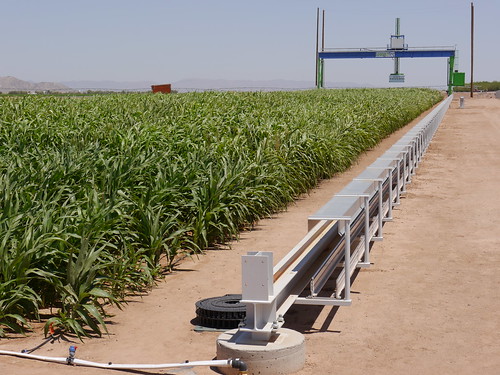
ARS scientists and their partners are using a giant electronic scanner in Maricopa, Arizona to study the growth characteristics of sorghum plants as part of a project designed to speed biofuel crop development. Photo by Jeffrey White, Agricultural Research Service.
This post is part of the Science Tuesday feature series on the USDA blog. Check back each week as we showcase stories and news from USDA’s rich science and research portfolio.
With its 30-ton frame and 50-foot-high catwalk, the newest scanner for measuring crop plants in Maricopa, Arizona, can be seen for miles. It looms over a tract the length of two football fields and moves along steel rails.
“When people saw this big apparatus being built here, they started asking if we were going to be looking for space aliens,” says Jeffrey W. White, an Agricultural Research Service (ARS) plant physiologist with the Arid-Land Agricultural Research Center in Maricopa. Rather than studying the heavens, the scanner is measuring the individual characteristics of thousands of energy sorghum plants growing underneath it. The effort could play an outsized role in meeting the Nation’s future energy needs.
This research is designed to speed up the pace of bringing biofuels to market and is part of a program sponsored by the Energy Department’s Advanced Research Projects Agency-Energy (ARPA-E) known as Transportation Energy Resources from Renewable Agriculture (TERRA).
“The TERRA program represents the intersection of biology, engineering and computer science. It capitalizes on public-private partnerships and is really a new horizon for agricultural productivity and sustainability,” says Joe Cornelius, ARPA-E program director.
The DOE program in Maricopa is led by investigators from the Donald Danforth Plant Science Center in collaboration with USDA, the University of Arizona, the University of Illinois, Washington University of St. Louis, Kansas State University, Texas A&M University and Clemson University. It builds on strategic investments by USDA and the National Science Foundation.
White’s role is focused on developing energy sorghum better able to withstand the droughts and rising temperatures expected with climate change. “Maricopa’s arid climate makes it an ideal site for measuring the effects of heat and drought on bioenergy crops. It’s one of the most challenging environments for growing crops in the continental United States,” he says.
The plots in Maricopa include hundreds of lines, cultivars and hybrids of sorghum. As the scanner moves across the field its cameras and sensors pass over the plants capturing data about them in granular detail. The researchers expect to see numerous variations in heat tolerance and water stress from one plant to the next.
The scanner is designed to save time. In a half-day it collects as much data as a single person could gather with a handheld scanner in five weeks. Some 42,000 individual plants are being scanned. The data collected will be publicly accessible and the researchers expect it to be mined for years to come.
The team is also using the scanner to advance a technology still in its infancy: gathering data with improved cameras and imaging systems that are sensitive to different wavelengths of light. The same type of crop plants, sometimes growing side by side, can vary widely in how they respond to water or heat stress. Scanners that detect different wavelengths can pick up details that escape the naked eye. Those details—such as the temperature of a plant’s foliage, the amount of chlorophyll it contains and the surface area of its developing leaves—can be important indicators.
The focus of the current program is sorghum, a drought-tolerant crop that can provide food, fuel and feed. In the future, other crops including corn, soy beans, wheat and lettuce could benefit from what the researchers learn. “This technology could lead to advances in a wide range of areas,” White says.

Friday, October 7, 2016

Growing Rural Economies and Opportunities through Social Media

From the #USDA:


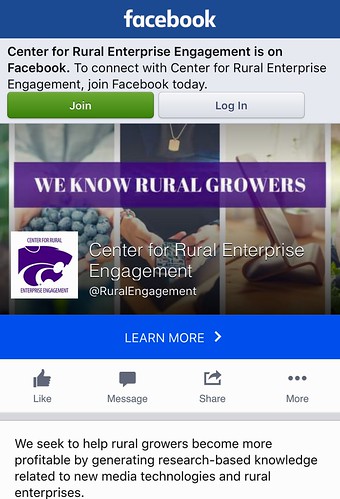
KSU Center for Rural Enterprise Engagement Facebook screenshot
Kansas State University used a FSMIP grant to develop social media strategies for rural businesses to expand their customer base.
From Facebook to Snapchat, rural businesses are exploring how to use social media to improve their customer’s experience and expand their customer base. Over the last eight years, USDA and the Obama Administration have partnered with rural communities to build more opportunities that support rural small business owners, farmers and ranchers through applied research.   Today USDA awarded nearly $1 million in Federal-State Marketing Improvement Program (FSMIP) grants to support market research to strengthen markets for U.S. agricultural products domestically and internationally.
Administered by USDA’s Agricultural Marketing Service (AMS), FSMIP projects make a real difference to diverse stakeholders and largely benefit rural communities.  For example, in 2013, FSMIP awarded a 2-year grant to Kansas State University to develop social media strategies for small green businesses, including nurseries, garden centers and lawn care operations, and to explore the potential of social media to expand their markets and profitability.  Social media holds promise as a strategy for these rural businesses which frequently have a small customer base and struggle to be profitable throughout the year, given the seasonal nature of their business.  Through social media, business owners could reach more potential customers for little to no cost but they often do not know how or why they should use these tools.
This successful project resulted in new research-based marketing tools including a social media strategy tool-kit and website.  These result are being shared and used by many different rural businesses across the nation. To continue and expand on the success of this project, Kansas State University was awarded a 2016 FSMIP grant to study consumers’ preferences toward social media marketing by farm-based businesses.  You can see all the 2016 FSMIP grants listed on the AMS website.
USDA’s Know Your Farmer, Know Your Food Initiative (KYF2) coordinates the Department’s work to develop strong local and regional food systems – including FSMIP projects.  Information on local and regional supply chain resources is available on the KYF2 website, and the KYF2 Compass can help users locate USDA investments in their community.  More information on how USDA investments are connecting producers with consumers, expanding rural economic opportunities, and increasing access to healthy food is available in Chapter IV of USDA Results on Medium.
Flowers in a greenhouse
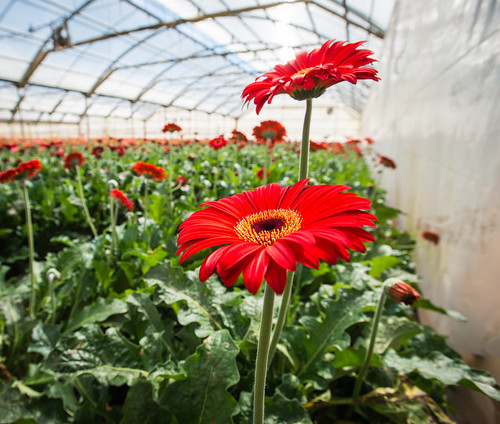
Business can really blossom at garden centers and nurseries though social media marketing reported project researchers supported by USDA’s Federal-State Marketing Improvement Program (FSMIP). Today, AMS awarded nearly $1 million in FSMIP grants to strengthen and explore new market opportunities for U.S. food and agricultural products. (USDA Photo)

Farm to School Goes Year Round in the Northeast

From the #USDA:


Connecticut service members serving local blueberry smoothies
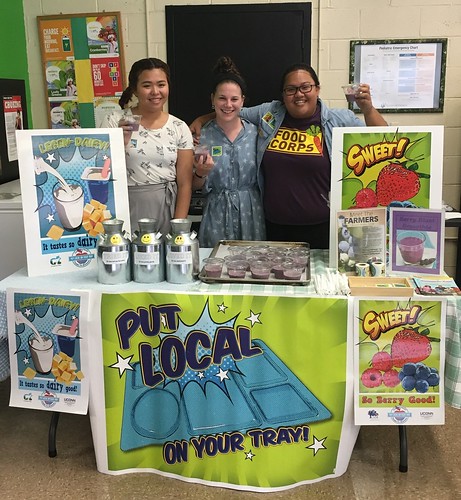
Connecticut service members serve local blueberry smoothies and continue farm to school efforts at summer meals sites.
Over the past few summers, sponsors of USDA’s Summer Meals Programs have been elevating meal quality and encouraging program participation by serving seasonal menus, utilizing high quality ingredients, and providing nutrition education activities. We’ve heard of such farm to summeractivities – the embedding of farm to school principles within summer meals programs – from practitioners all around the country. Here in the Northeast, summer 2016 brought a wave of coordinated programming, and National Farm to School Month is the perfect time to celebrate this trend that is supporting healthy kids and communities all year long!
Vermont: Farm to School 12 Months a Year
Last year, VT FEED secured funding from a local philanthropic partner, and embarked upon a mission to extend its robust farm to school training, coordination, and professional development services beyond the school year. The Farm to School 12-Months of the Year project provided local procurement training and guidance for summer sponsors, piloted summer meals sites over the weekend at two farmers markets, and ran food and nutrition-related activities at 10 summer sites. By continuing the strategies that have built robust farm to school programs over many years throughout the summertime, Vermont is creating consistent learning opportunities and year-round access to nutritious foods for kids across the state.
Massachusetts: Farmers Markets as Summer Meals Sites
Farm to summer strategies picked up steam elsewhere in the Northeast, as the Massachusetts Farm to School Project secured funding to support the opening of additional summer meals sites at natural access points for local foods and fun, healthy community activities: farmers markets! With additional planning and support from the Child Nutrition Outreach Program and Massachusetts Department of Elementary and Secondary Education, farmers market sites were piloted in five different communities across Massachusetts. By setting up a new site at the Greenfield, Mass., market, Greenfield Public Schools was able to add local fruits and vegetables to their menu from market producers and serve kids on Saturdays.
Connecticut: Service Members Launch Farm to Summer Programming
Building new elements of programming – like finding and buying local foods, promoting healthy menu items, running taste tests or gardening activities that get kids excited about summer meals – all take additional time and coordination. Partners in Connecticut tapped a school year resource to help sponsors make this programming possible. Fifteen FoodCorps and ten AmeriCorps service members were trained and supported by UCONN ExtensionEnd Hunger CT!, and FoodCorps CT, with help from a USDA Farm to School Grant, and were perfectly positioned to run farm to summer activities at summer meals sites throughout the state. Local blueberry smoothies were a hit at Anna E. Norris Elementary School in East Hartford, and kept kids nourished and refreshed for their outdoor activities.
For more information on extending farm to school year-round through summer programs, check out USDA’s Farm to Summer Fact Sheet and other helpful resources at our farm to summer website.